
Why There Is No Perfect Email Sequence for Everyone
Email sequences for leads are often explained as if there were a fairly rigid formula. A specific frequency, templates that work, and little else. But when you actually start working on this, you realize it does not quite work that way.
Yes, of course you can start with a foundation. In fact, I think you should. Having an initial structure helps a lot. The problem arises when that foundation is treated as something fixed, as if it had to work the same way for every business, in every industry, and with every type of lead. And it usually does not.
Ultimately, every industry responds differently. Even within the same industry, there are differences depending on the type of customer, when they enter, or their level of interest. That is why the perfect sequence does not emerge at the beginning. It emerges after testing, taking a close look at what is happening, and understanding where people get stuck.
And that is where something that is often somewhat overlooked comes in: metrics. If you do not have a clear understanding of the conversion rates and traceability of the sequence, it is very difficult to adjust anything. Because you can make assumptions, yes. But making assumptions is one thing, and clearly seeing where the lead stops moving forward is another.
Start With a Foundation, but Do Not Stop There
I would definitely start with base templates. It seems like the most logical approach to me. Having an initial sequence to get started prevents you from improvising every email and forces you to organize the message, the pace, and what you want to say at each stage.
But stopping there is usually a mistake. That first version is there to get you started, not to be accepted as final. Then you need to tweak things, move pieces around, change the approach of some emails, and see what fits best. Because a sequence is not refined through theory. It is refined once it is already running.
It also helps to assume from the outset that you will not have just one fixed sequence. You will normally end up creating several, depending on the stage the person is in. If you know that from the start, you build a better foundation and do not force every lead to follow the same journey.
Divide Sequences According to the Buying Stage
I think this part is quite important. Dividing sequences according to the buying stage allows you to treat each lead appropriately. That is ultimately what this is about. Not sending the same thing to everyone as if they were all thinking exactly the same way.
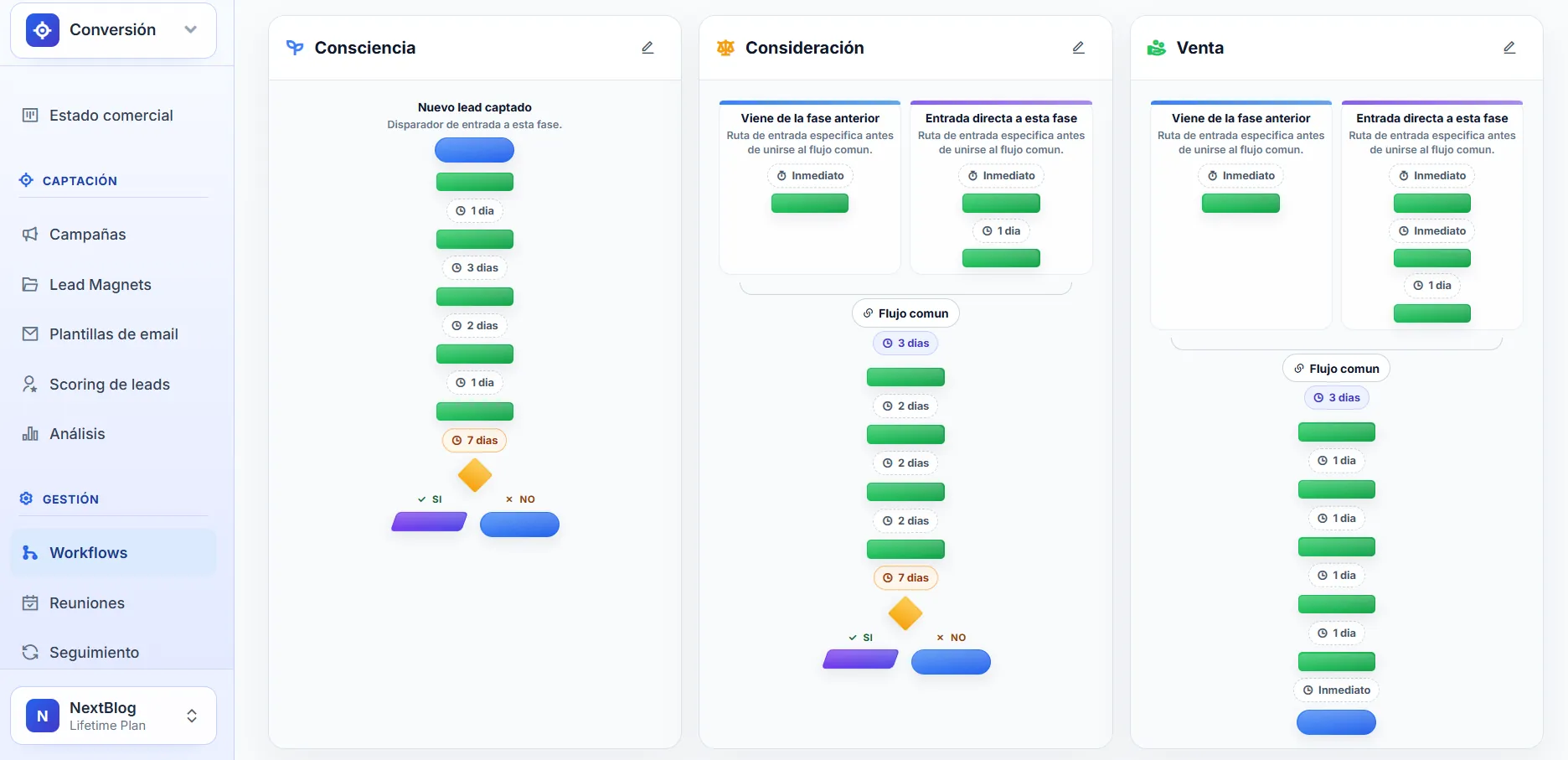
The simplest way to look at it is in three stages: awareness, consideration, and sales. From there, you create a sequence for each one. And that already changes the way you write the emails, the type of content you share, and what you expect to achieve with each send.
Because a lead who barely knows who you are does not need the same thing as one who already trusts you a little. And someone who is already close to making a decision does not need to keep receiving overly general emails either. If you mix everything together, the sequence loses its impact. And often, it stops making sense.
Awareness Stage
In the awareness stage, the lead is still figuring out who you are, what you do, and why they should pay attention to you. So I would not push too hard here. What you need to do is share useful content, clearly explain the problem you solve, and start building some trust.
And one more thing. There should not be a single sequence for the entire buying journey. Even in this first stage, there can be nuances. Some leads arrive colder, while others already have some context. If you lump everyone together, it becomes very difficult for the sequence to perform well.
Consideration Stage
There is already a slight shift here. The lead has paid some attention to you, has seen some of your content, and is starting to assess whether what you offer is a good fit. So the email has to help them better understand why it would make sense to keep moving forward with you.
At this stage, I think it is important to keep providing value, but with more intention. It is no longer just about showing up and being likable. It is about gradually building authority, addressing the doubts that usually hold people back, and helping them see that you understand their situation. Little by little. Without moving too fast, but without staying on the surface either.
Sales Stage
In the sales stage, you can present the offer or that hook that helps you secure a meeting with the potential customer. The goal changes quite a bit here. You are no longer just building trust. You are trying to make something more concrete happen.
Even so, I do not think this is about dropping a proposal out of nowhere and waiting. What usually works best is for that offer to come after you have exchanged value, after the person trusts you a little more, and after they already recognize some authority in you. Then, yes. Then it makes much more sense to ask them to take that next step.
What a Good Email Sequence for Leads Needs to Do
To me, a good email sequence for leads has to do something fairly simple to understand. It has to share valuable content and, from time to time, introduce your brand. That balance matters a lot, because if you are constantly selling, it becomes tiresome. And if you are constantly providing content but never moving forward, the sequence remains incomplete.
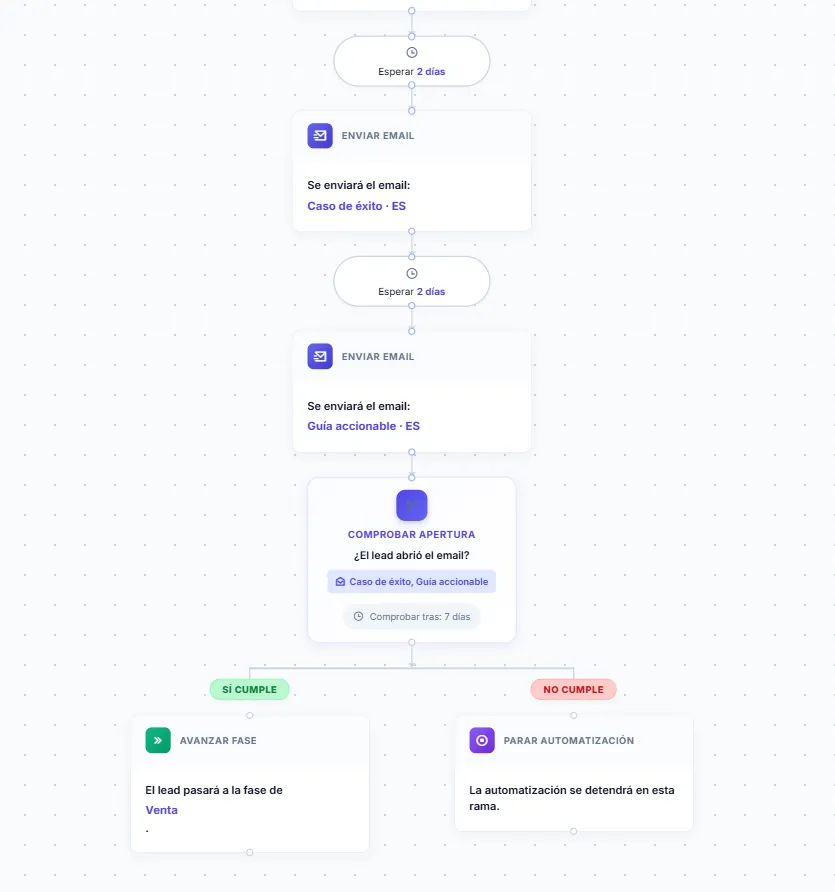
It also has to move the lead from one point to another. Even if only slightly. From not knowing you to recognizing you. From recognizing you to trusting you. From trusting you to wanting to talk to you. If the emails do not help drive that progress, then you may be sending emails, yes, but you are not building an intentional sequence.
And then there is the less glamorous but very necessary part: testing. This is done a lot. You launch a version, see how people respond, and make adjustments. Sometimes the problem lies in the email's approach. Sometimes in when you send it. Sometimes you are asking for something too soon, before the time is right.
Test, Measure, and Adjust Until You Find What Works
There are no magic sequences. What there usually is, is a lot of testing and a lot of adjusting. And the sooner you accept that, the better. Because then you stop looking for the perfect template from the very beginning and start working with something much more useful: the feedback people give you through their responses.
To do that properly, you need to see where the bottleneck is. Which email causes attention to drop. At what point people stop moving forward. Which part of the sequence is slowing down the process. And to see that, once again, you need clear metrics. Clear conversion rates. Traceability.
Once you have that, you can act with some degree of judgment. Change a subject line, reschedule a call, adjust the content, separate the stages more effectively. Specific things. Because if you do not measure, you end up changing things somewhat blindly. And sometimes it seems like you are improving, but in reality you are just moving pieces around without really knowing what effect they have.
The Perfect Sequence Emerges Later, Not at the Beginning
I think the perfect sequence for your business or industry emerges over time. Not at the beginning. It emerges after you have started with a foundation, segmented properly by stage, and gradually corrected what was not working.
And even then, truly perfect... well. You know what I mean. What you really find is a sequence that fits better, that responds better to your type of lead and your way of selling. And that is already quite a lot. Because in this area, what works best is often not finding a magic formula. It is continuing to refine things until the sequence starts to make sense for your specific situation.
👉 A contact leaves you their email address, and 30 days go by. Twelve questions, to answer with someone from sales by your side, tell you when the lead goes cold and what to do. Review what we do with each new contact